
Task Simplification
How can coaches simplify SSGs by using constraints to find the Optimal Challenge Point? +SSG examples with task simplification

In a recent article, I wrote about teaching decision making in basketball.
I want to build on this article and write about task simplification. You might have come across this concept before. In traditional coaching, coaches will often decontextualize an activity. This means they will remove the decision making so that players can repeat the “fundamentals” before applying it in a game context.
If you have been coaching using the CLA, you would have experience with the power of simplifying (or amplifying) the difficulty of an activity. If the activity in practice is too easy players might get bored and lose focus. If it is too difficult, players become disengaged. The challenge point should be somewhere in between.
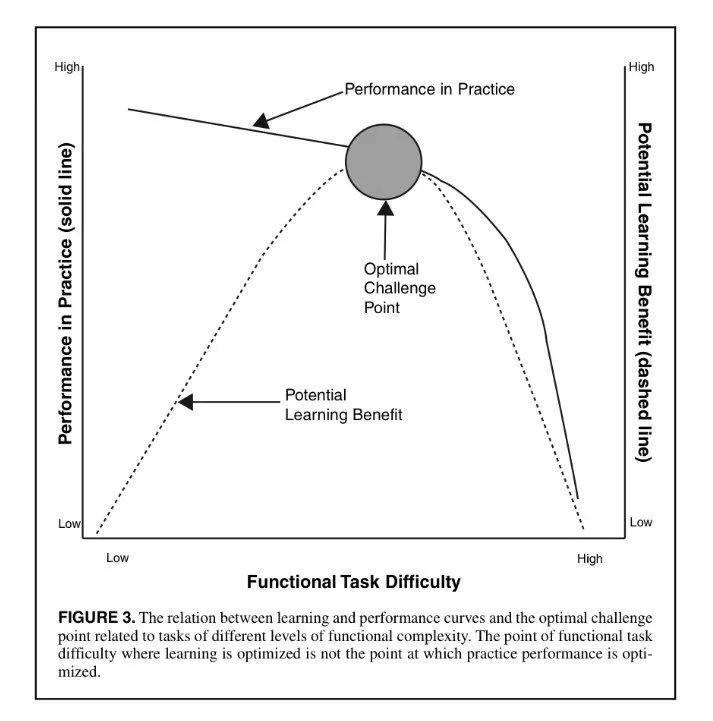
A great way to achieve an optimal challenge point for a mix of players at practice is to use individual constraints. Examples include:
Player A cannot use the backboard on lay ups.
assists from player B = double points
Player C cannot score fast break baskets in the next game.
Not a One-Size-Fits-All Approach
This is where creativity comes in. There isn’t one SSG or constraint that is guaranteed to reach the appropriate challenge level for each group. I had an interesting experience at the Transforming Basketball Summer Camp while teaching 3-on-2 Dominoes Bursts.
The first constraint I added was “Must play with zero second decisions or it is a TO”. I have done this activity countless times and have added that same first constraint to positive effect. Not this time, however. After the session, I reflected on why it was not as successful as in previous instances. I came to the conclusion that the reason the players were not able to naturally make quick decisions to shoot, drive, or pass was because there was no space to drive (poor floor spacing) which led to less players to pass the ball to.
Perhaps a better solution would have been to add the “floor is lava” constraint first. This would create better spacing on the floor, teach players the importance of sprinting into and out to space, and, ultimately, give the players with the ball more options.
And this is where as a coach, it is very important to watch the activities and the players’ behaviors closely. The goal of the coach is to expand or reduce the affordance landscape relevant to the principle they are teaching. This might mean simplifying the task
How Can Coaches Simplify Practice Activities
There is a big difference between simplifying and decomposing.
Simplify: lower the level of difficulty while keeping perception and action coupled.
Decompose: Breaking down the movements into isolated pieces.
What coaches have to think about when simplifying tasks is usually, “how can I make this SSG easier for the offense? Harder for the defense?” (unless coaches are asking the opposite, how can I make this easier for the defense? Harder for the offense?)
Simplifying tasks for the offense:
Advantage start: This is where the offense starts with some kind of advantage. an example of this is Chameleon 1-on-1
Constrain the defense: Examples of this include hands behind the back, only one hand, cannot steal, cannot block, or can only play defense until a specific point.
2-on-1 Passing
Offensive players are positioned on either lane line. They can move along the lane line.
Defense has to try to touch the ball to switch out.
First pair to 10 straight passes wins.
In the video below, you will see me add a new constraint to the small-sided game.
Constraint added: Players can only catch and pass using one hand only.
This is an example of adjusting the challenge point and raising the level of complexity.
An Alternative Approach to Teaching
Traditional skill work is just not enough. The most important skill you can learn when passing the ball is the decision that happens before the pass. Sometimes, this occurs a fraction of a second before the pass.
Look at the below videos of 2 of the best passers in the NBA: Trae Young and Luca Doncic.
Types of pass made
Clip 1: Jumping pocket pass
Clip 2: Adjust mid-air pass to cutter
Clip 3: No-look alley-oop
Clip 4: Over the head pass to a late cutter
These types of passes cannot be trained in isolation from the decision-making process. All players will have different action capabilities and therefore will find the most functional ways for their bodies to make a pass. Take Young, for example, he jumps to be able to pass over the defense.
Training all players to pass in the same ways does not take this into consideration. It is imperative we create representative learning environments and adjust the constraint intentionally to find the optimal challenge point so that players can have a healthy balance of success and failure.
How to Work on These Types of Passes
Of course, coaches can recreate the exact in-game scenarios in which those passes occurred and due to the problem in the environment, players will find solutions that resemble the ones seen in the video.
Another game that can be used to work on passing is:
2-on-2 Pass Keep Away
Instructions:
All players play inside the 3-point line.
Offense is trying to complete 10 passes in a row while the defense is trying to stop them.
Defense becomes offense immediately after a steal/turnover.
Use handball rules if needed eg. Cannot touch player that is holding ball.
The 3 constraints you will see below are:
Add = Bounce passes only
Add = Catch with a 1,2 or 2,1 step
Add = catch and pass with one hand only
Video Examples
Clip 1 = Bounce passes only. Players will want to make the ‘easy’ pass which is over the top, but in this game I have constrained it so players can only make bounce passes. I noticed this forced the off-ball offensive player to work harder to get open.
Clip 2: Catch and land with 1,2 or 2,1 step.I added this constraint because I noticed that the female players tended to land exclusively with a hop step. I added this so they could explore different catching and landing solutions.
Clip 3: Catch and pass with 1 hand only. This is a fun one I like to add to really increase the challenge level. It also forces the passer to think about where and how they are passing the ball.
Hopefully, the above clips can provide you with more of an idea of how you can manipulate constraints to adjust the challenge level of your SSGs.
The Importance of Calibrating Cognitive Load
Finding the right challenge point is ultimately about calibrating cognitive load — not overwhelming players with too many problems to solve, but not under-stimulating them either. When players operate within this “sweet spot,” learning becomes deeper, more adaptable, and more transferable to real games. Every constraint a coach adds or removes subtly shapes how players perceive, decide, and act. The art of coaching, then, lies in recognizing when to simplify, when to amplify, and how to adjust the environment so that each player remains fully engaged in solving meaningful problems.
Do not take my word for it - listen to this except from Neil deGrasse Tyson’s podcast.
It’s about expanding minds — not by giving them all the answers, but by designing just the right level of challenge for discovery to happen.